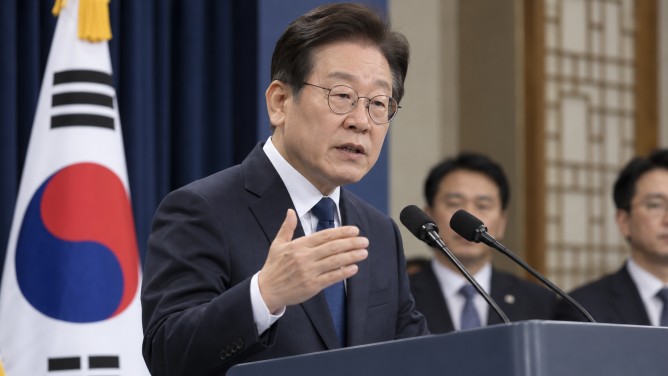
South Korean President Lee Jae Myung has cautioned against “irresponsible extremism” in the ongoing debate over prosecution reform, emphasizing that rigid and uncompromising demands may hinder efforts to implement significant changes in the judicial system. In a social media statement on Wednesday, Lee responded to critiques of his prior comments, which labeled some reform advocates as extremists. He underscored that while many people support prosecution reform for the public good, excessive demands from some quarters could impede progress.
Lee highlighted the risks associated with all-or-nothing approaches, suggesting that attacking those advocating for practical reforms might create unnecessary divisions and weaken the push for meaningful institutional changes. He also criticized the portrayal of uncompromising stances as the sole legitimate path to reform. These remarks were widely interpreted as targeting hard-line members within his ruling Democratic Party, who have accused him of backtracking on the party’s long-standing commitment to prosecution reform.
The crux of the disagreement lies in the powers granted to prosecutors in South Korea. Lee had previously supported a measure that would allow prosecutors to conduct supplementary investigations in exceptional cases. However, recent legislation introduced by the ruling party stripped prosecutors of their investigative authority, limiting their role to bringing charges and maintaining indictments.
The debate underscores the differences within the ruling party regarding the scope and implementation of prosecution reform. President Lee has been advocating for a balanced approach that considers both institutional changes and practical realities. His comments reflect a call for moderation and dialogue to avoid exacerbating conflicts within the party and to ensure that the reform process remains constructive and effective.