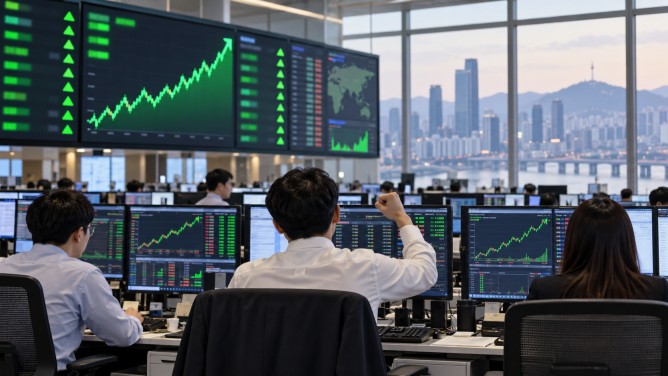
South Korean stocks experienced a strong rebound on Wednesday, driven by easing concerns regarding spending on artificial intelligence (AI) infrastructure. This positive shift in investor sentiment came after impressive earnings reports from Super Micro Computer, a U.S.-based AI server manufacturer, which alleviated fears of excessive investment in AI technologies.
The Korea Composite Stock Price Index (KOSPI) surged by 3.29%, closing at 5,735.66 points, recovering 182.92 points from the previous session’s losses. This significant rise prompted the Korea Exchange to temporarily halt program buying for five minutes as KOSPI 200 futures climbed over 5%—the first occurrence of such an intervention in two months.
Major South Korean technology stocks benefited from the renewed optimism. Samsung Electronics saw its shares increase by 5.67% to 223,500 won, while SK hynix gained 5.81% to reach 1.29 million won. Additionally, SK Group’s holding company, SK Corp., rebounded by 12.62% to 482,000 won, recovering from its earlier downturn. LS Electric also reported a 7.02% rise to 166,100 won following strong third-quarter earnings, boosted by demand for AI data center power equipment.
Despite the positive trend in tech stocks, LIG D&A, a defense company, faced a decline of 9.03% to 498,500 won. This drop came after South Korea’s arms procurement agency prohibited the company from participating in defense contracts for two years due to bribery allegations.
Foreign investors played a crucial role in supporting the market’s recovery by purchasing a net 659.96 billion won worth of South Korean shares. The Korean won also strengthened slightly, trading at 1,325.2 against the US dollar, marking an increase of 0.8 won from the previous session’s close.
The resurgence of South Korean stocks highlighted a renewed confidence in technology shares, underpinned by strong corporate earnings and a more optimistic outlook on AI infrastructure investments. This recovery reflects a broader easing of market pressures that had previously weighed on investor sentiment.