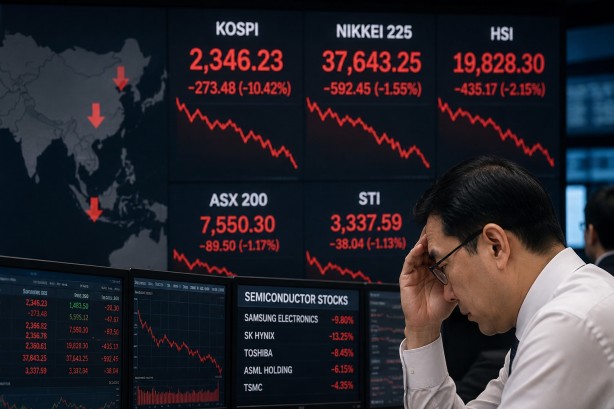
Asian stock markets experienced a downturn on Tuesday, with South Korea’s Kospi index suffering a notable drop of over 10%. This decline was largely driven by substantial losses in the semiconductor sector, where major players like Samsung Electronics and SK Hynix saw their shares tumble nearly 12%. The downturn was fueled by investor anxiety over the competitive pressure from Chinese AI startups and chipmakers, which is threatening to slow the expansion of the global artificial intelligence industry.
In addition to South Korea, other prominent Asian markets also closed the day with losses. Japan’s Nikkei, Taiwan’s Taiex, Hong Kong’s Hang Seng, and China’s Shanghai Composite all reported declines, reflecting the broader regional trend. The only exception to this pattern was Australia’s S&P/ASX 200, which managed to buck the trend and end the day with gains.
The pressure on semiconductor stocks highlights the growing concerns over the future landscape of the AI industry. The rise of Chinese competitors in this space is causing jitters among investors who worry about the potential impact on established market leaders. This shift in dynamics is prompting market participants to reassess the valuation and growth prospects of these tech giants.
Meanwhile, a separate development in the global energy market saw oil prices fall. This was due to easing tensions between the United States and Iran, which raised the possibility of renewed diplomatic discussions. The de-escalation reduced the immediate concerns over global energy supplies, providing some relief to a market that has been on edge due to geopolitical uncertainties.
The combination of these factors contributed to a complex trading environment in Asia, with investors balancing the implications of geopolitical movements and competitive pressures in key industries. The market reactions across the region underscore the interconnected nature of global economies and the ripple effects that shifts in one area can have on others.