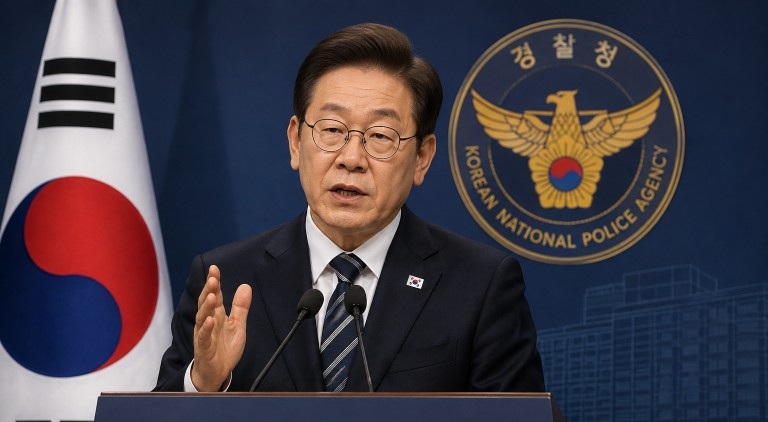
In light of significant shifts in South Korea’s criminal justice framework, President Lee Jae Myung has advocated for sweeping reforms within the police force, emphasizing the need for greater oversight. He warned that the police could soon emerge as the most dominant government body, following legislative changes that will significantly enhance their investigative powers. During a Cabinet meeting, President Lee proposed the creation of a specialized entity tasked with overseeing police reform and enhancing accountability measures. He has directed the prime minister’s office to solicit public input and formulate a strategy for establishing this new oversight body.
This initiative follows parliamentary approval of amendments to the Criminal Procedure Act, which are set to transfer investigative authority entirely from the prosecution to the police. Once these amendments are implemented, the police will hold exclusive responsibility for conducting criminal investigations. The president’s call for reform is also influenced by recent controversies surrounding the police’s handling of public safety incidents, notably the case involving a woman’s death on Jeju Island after she was reported missing. This incident has sparked debate about police procedures and their accountability in ensuring public safety.
President Lee underscored the necessity of balancing the increased power granted to the police with heightened responsibility. He stressed that unchecked power could lead to significant issues, advocating for systemic changes to prevent lapses in public safety and to bolster police accountability. The president’s remarks reflect a broader concern over the potential for power concentration within the police force and the implications it might have for the country’s governance and public trust.
By urging these reforms, Lee hopes to address public concerns and ensure the police operate under a framework of transparency and responsibility. The establishment of an oversight body is seen as a crucial step in maintaining checks and balances within the law enforcement system, particularly in light of the expanded role the police will play following the legislative changes. The president’s initiative indicates a proactive approach to preventing abuse of power and ensuring the safety and security of the public remain paramount.