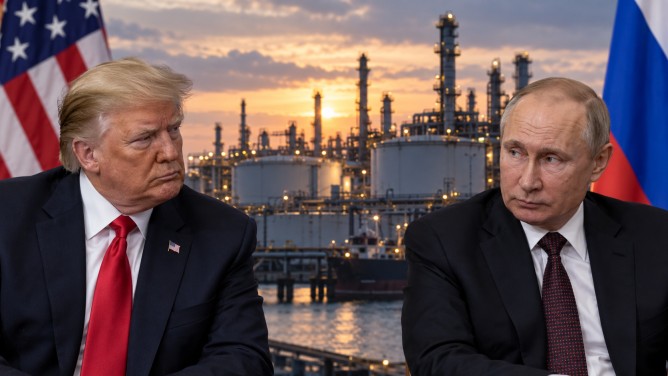
In a surprising move, US President Donald Trump has announced an agreement with Russian President Vladimir Putin to increase diesel supplies from Russia, signaling a significant policy shift amid persistent global fuel price hikes and the ongoing conflict in Ukraine. The agreement will see the initial shipment of over 300,000 tonnes of Russian diesel, with further deliveries expected in the coming months. Trump emphasized the importance of lowering fuel costs for American farmers, ranchers, and truckers as a primary motivation for the deal.
This development raises questions about the future of US sanctions on Moscow, which were imposed in response to Russia’s invasion of Ukraine. The decision to engage in such an agreement, despite existing sanctions, has sparked debate over the US administration’s commitment to applying economic pressure on Russia. Ukrainian President Volodymyr Zelenskyy voiced concerns, suggesting that the increase in energy revenue could bolster Russia’s military efforts, particularly as the US and Ukraine are engaged in discussions to end the war.
The Kremlin confirmed that the discussions between Trump and Putin included topics on energy supplies and the Ukraine conflict. Russian officials have indicated their readiness to supply oil and petroleum products to the global market, potentially altering international energy dynamics.
Following the announcement, the US Treasury Department granted a temporary license permitting certain Russian diesel shipments to enter global markets, thereby providing limited sanctions relief. This exemption applies to eligible cargoes loaded onto tankers by the specified deadline and will remain in effect until April 2027.
The agreement has drawn criticism from US lawmakers who argue that easing restrictions could undermine efforts to compel Moscow to cease its military actions in Ukraine. Moreover, energy analysts caution that the added diesel supplies might not significantly impact fuel prices, as these shipments could merely be diverted from existing clients to new ones. Additionally, Russia is grappling with its own domestic supply issues due to attacks on its oil refineries.
This deal underscores the complex interplay between geopolitical conflicts and global energy markets, as the US strives to address soaring fuel costs while balancing its economic interests against its strategic support for Ukraine.