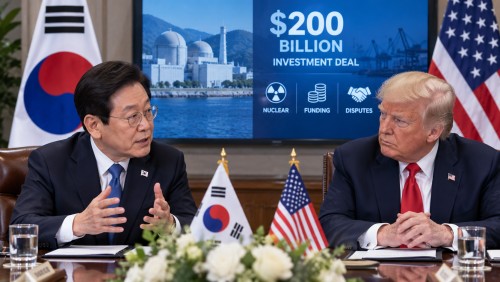
South Korea’s ambitious $200 billion investment plan in the United States is encountering significant hurdles, primarily over nuclear project agreements, funding schedules, and investment risks. The ongoing negotiations between the two nations have yet to produce a final agreement, leaving the future of several major projects uncertain.
Central to the discussions is the contentious issue of nuclear reactor design. The United States and South Korea have been negotiating the construction of eight nuclear reactors on American soil. While six of these reactors are proposed to use Westinghouse’s AP1000 design, the remaining two would incorporate South Korea’s APR1400 technology. However, US officials and Westinghouse have expressed opposition to the inclusion of the APR1400 design, complicating efforts to finalize the nuclear package.
South Korea’s Industry Ministry has indicated that discussions are ongoing, with no decisions yet reached. As part of the negotiations, Seoul is also considering a substantial financial commitment to nuclear-related projects, potentially allocating up to $120 billion of its overall investment. Despite this, differences persist, notably regarding Seoul’s interest in acquiring a 15% to 20% stake in Westinghouse, which is met with resistance from the US side that favors limiting South Korea’s stake to below 10%.
The complexities extend beyond nuclear projects. South Korea is contemplating involvement in a US initiative for processing spent nuclear fuel and a proposed liquefied natural gas project in Alaska. These ventures, however, come with concerns over potential construction costs and long-term returns.
Disputes over funding schedules add another layer of uncertainty. The United States has reportedly requested over $9 billion from South Korea by the end of the year. In contrast, South Korea had initially planned to start with a smaller investment in 2026, with plans to increase contributions from 2027 onwards. Furthermore, disagreements persist over how profits and losses should be calculated, with South Korea advocating for a model where profits from successful projects offset losses from unsuccessful ones, while the US prefers separate calculations for each project.
Despite these challenges, negotiations continue as both countries aim to iron out the details of the investment package. The resolution of these issues is crucial for solidifying South Korea’s substantial financial commitment to the US and advancing their collaborative energy projects.