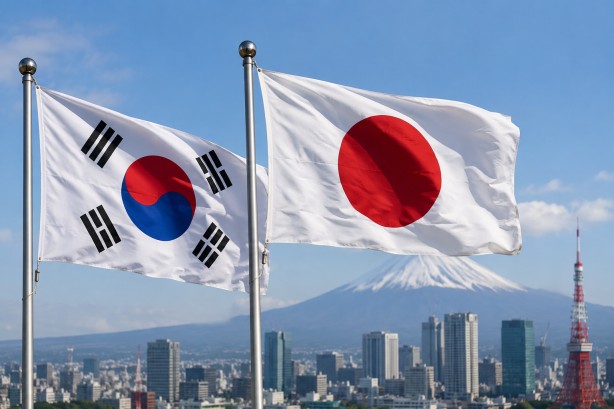
Japan’s political landscape is experiencing a significant shift towards conservatism under Prime Minister Sanae Takaichi, posing new challenges for its relationship with South Korea. This development is causing concern over the potential impact on historical and territorial disputes, which could threaten the fragile diplomatic ties that have been established recently. Traditionally, South Korea and Japan have managed to compartmentalize their relationship into a “two-track” strategy, where they separate contentious historical issues from crucial cooperative areas like security and economic partnerships. However, a report from South Korea’s Institute for National Security Strategy suggests that the increasing political instability and rightward drift in Japan could endanger the advancement achieved in their bilateral relations.
Recent events have reignited tensions, notably with Japanese politicians visiting the Yasukuni Shrine, a site that has long been a point of contention due to its association with Japan’s militaristic past. Additionally, Japan’s reassertion of its territorial claim over the Dokdo islands, known as Takeshima in Japan and currently administered by South Korea, has further strained the relationship. Although Prime Minister Takaichi refrained from visiting the shrine on the anniversary of Japan’s World War II surrender on August 15, she did send a ritual offering. This gesture, along with visits by other senior Japanese officials, has triggered formal diplomatic protests from South Korea.
South Korea’s President Lee Jae Myung has opted for a balanced response, acknowledging the deep-seated historical grievances while stressing the importance of maintaining and enhancing cooperation with Japan. His approach underscores the necessity for both nations to navigate these historical sensitivities carefully, as they are crucial to maintaining the diplomatic progress made thus far.
Experts caution that if Japan and South Korea fail to make tangible advancements in their cooperation, the ongoing disputes over historical narratives, territorial sovereignty, and wartime controversies could severely undermine their “two-track” approach. Without clear progress, the potential for these issues to overshadow pragmatic cooperation remains high, suggesting that both countries need to prioritize effective dialogue and practical collaboration.