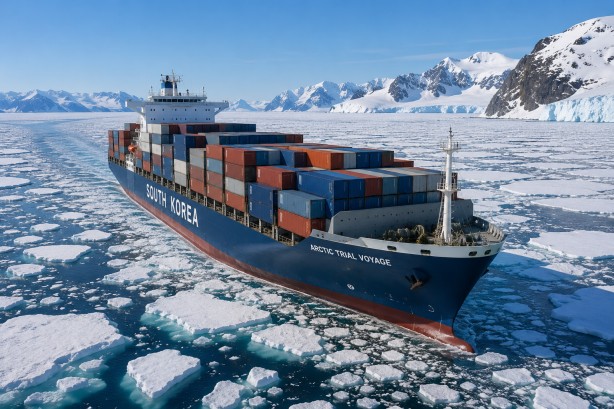
In a pioneering move, South Korea is trialing a new maritime route through the Arctic, aiming to establish the Northern Sea Route as a viable alternative path for shipping between Asia and Europe. This comes against the backdrop of disruptions in traditional trade routes. The container ship, PanStar Acro, set sail from Busan New Port on August 23, with plans to dock at Felixstowe in the UK, Rotterdam in the Netherlands, and Gdansk in Poland before making its way back to South Korea. The entire journey is expected to span approximately 45 days.
The Northern Sea Route, which hugs the Arctic coastline of Russia, offers a significant advantage by potentially cutting down the travel distance by around 7,000 kilometers, thereby reducing the journey time by about 10 days compared to the usual route through the Suez Canal. This is according to insights from the Korea Institute for International Economic Policy. With geopolitical tensions and advancements in maritime technology, South Korean officials are optimistic that this Arctic path might emerge as a substitute for traditional Middle Eastern shipping lanes.
This trial voyage by South Korea follows a similar initiative by a Chinese container ship earlier in the month, signaling a growing interest in utilizing Arctic waters for commercial navigation. Analysts indicate that South Korea is keen on exploring this route to ensure it keeps pace with China as the commercial use of Arctic passages expands. The interest in Arctic shipping is part of a broader strategy to diversify and secure trade routes.
Despite the potential benefits, the Arctic route is fraught with challenges. South Korean ships might face complications due to Western sanctions on Russia since the Northern Sea Route relies on Russian-provided navigation and weather services. This dependency could pose legal and operational hurdles for South Korean vessels navigating these waters.
Environmental concerns also loom large over this venture. Environmental groups have raised alarms about the potential ecological impact of increased shipping traffic in the Arctic. The region is already grappling with the effects of climate change, including rapid warming and shrinking sea ice. As such, the prospect of expanding commercial navigation in these fragile ecosystems has sparked a debate over the environmental costs versus the economic benefits of such routes.