Iran’s Islamic Revolutionary Guard Corps has long been the most powerful institution in the Islamic Republic, and the death of Supreme Leader Khamenei may now complete a shift in the balance of power that has been building for decades. With no supreme leader in place and the country at war, the IRGC is positioned as the dominant force shaping Iran’s future.
The organization was established after the 1979 revolution specifically to protect the regime from internal and external threats. Over time it evolved into a massive economic and military conglomerate with interests spanning construction, telecommunications, and the energy sector. Its political influence has grown in parallel, with IRGC veterans occupying senior government positions.
Key IRGC-linked figures including parliamentary speaker Mohammad-Bagher Ghalibaf and former commander Mohsen Rezaee are now at the center of Iran’s crisis management structure. Alongside President Pezeshkian and Larijani, they form an informal inner circle guiding the country through its most turbulent moment in decades.
The prospect of an IRGC-dominated Iran raises significant questions for regional stability. The organization has historically been the driving force behind Iran’s support for armed groups in Lebanon, Iraq, Syria, and Gaza. It has also been the primary target of US sanctions and has been designated a terrorist organization by the United States.
Whether the next Supreme Leader will be able to exercise genuine authority over the IRGC, or will instead serve as a legitimizing figurehead for its power, may be the defining question of Iran’s post-Khamenei era. The answer will have consequences not just for Iranians but for the entire region.
The IRGC’s Moment: Iran’s Military Eyes Greater Power After Supreme Leader’s Death
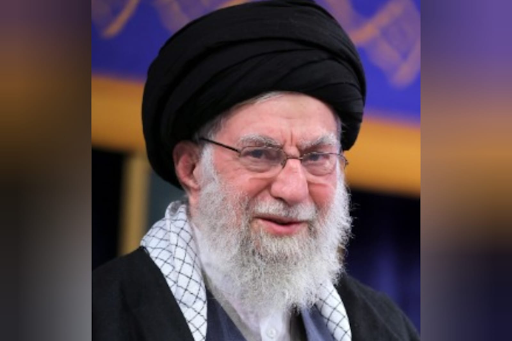
Photo by khamenei.ir, via wikimedia commons
77