What began as a targeted US-Israeli offensive against Iran was rapidly spreading into a broader regional conflict, with strikes and counter-strikes now touching countries from Lebanon to the UAE. On Saturday alone, Iranian missiles struck the UAE, Israeli warplanes bombed Isfahan in central Iran, and US warplanes continued their assault on Kharg Island. The war, which erupted on February 28, had now entered its third week with little sign of any diplomatic path forward.
At least 15 people were killed in Isfahan when an Israeli airstrike destroyed a factory manufacturing refrigerators and heaters. The Israeli military said it was working to eliminate Iran’s capacity to launch missiles and to weaken the government’s security apparatus. Iran fired rockets toward Israel simultaneously, while also directing ballistic missiles at the UAE, striking near Fujairah’s major energy port. Iranian military officials urged civilians near UAE ports and what they called “American hideouts” to leave the area immediately.
President Trump claimed in public statements that American bombers had effectively destroyed most of Kharg Island, Iran’s main oil export terminal. He hinted additional strikes were possible and ruled out a deal with Iran, saying the terms were not yet acceptable. Trump also called on multiple allied nations to send warships to the Strait of Hormuz, naming China, France, Japan, South Korea, and the UK. His comments were seen as the first public admission that the US might need international assistance to reopen the critically important waterway.
The conflict was exacting an increasingly severe global economic toll. The Strait of Hormuz, closed by Iran since the war began, carries about 20 percent of the world’s oil and gas shipments. Oil prices were pushing toward $120 per barrel and could reach $150 if Kharg Island’s export capacity was eliminated, analysts warned. The UAE’s Fujairah port, already hit by Iranian missiles, is one of the world’s top ship-refuelling hubs, and its disruption added further pressure to already strained global supply chains.
The human cost across the region was devastating. Iran had seen between 1,400 and 1,800 deaths from sustained bombing. Thirteen Israelis had been killed, and about 20 people in the broader Gulf area had died. Lebanon’s parallel conflict saw 800 deaths and 850,000 displaced. Six American service members died when a military refuelling aircraft crashed in Iraq. The US embassy in Baghdad was struck by missiles, triggering an emergency exit advisory for American civilians. Trump offered no timeline for ending the conflict, saying it would continue as long as the situation required.
From Isfahan to Fujairah: How the Iran-US War Is Spreading Across the Middle East
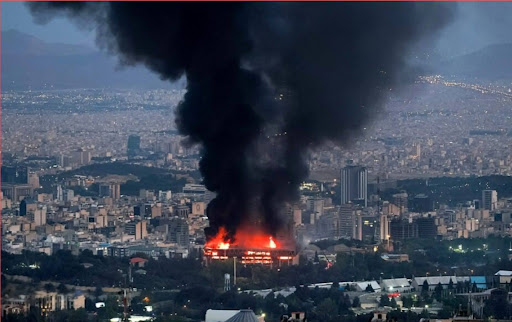
Photo by Mohammad Bornu / Avash Media / Wikimedia Commons (CC BY 4.0)
50