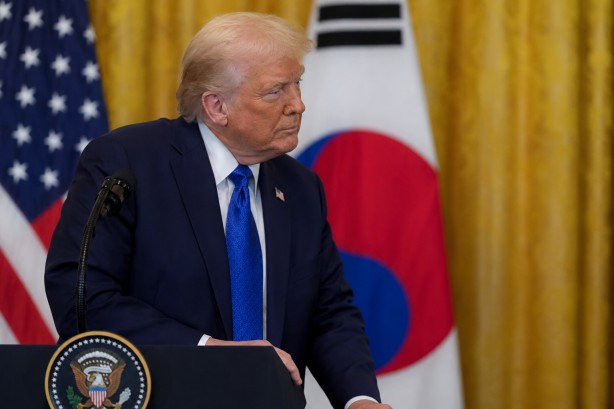
President Donald Trump has suggested that South Korean shipbuilding companies might have an increased role in upgrading and expanding the United States Navy. His remarks, made at the Pennsylvania Defense and Innovation Summit, point towards the potential of procuring naval ships constructed outside the US. Trump emphasized the urgent need to enhance the aging naval fleet and mentioned that Washington is exploring more collaborative efforts with South Korean firms and other international partners.
As part of this initiative, Trump announced plans for the construction of two National Security Multi-Mission Vessels at the Hanwha Philly Shipyard in Philadelphia, with the project estimated to be worth around $1.5 billion. This development comes in the context of intensified defense collaboration between the US and South Korea. South Korean President Lee Jae Myung disclosed that Trump had inquired about South Korea’s capability to rapidly build 10 US naval vessels, a topic that has been further discussed during recent international meetings.
The US Department of Defense and the Navy have been gathering information from prominent South Korean shipbuilders, such as HD Hyundai Heavy Industries and Hanwha Ocean, to evaluate their proficiency in designing and constructing military ships. Hanwha, in particular, is seen as a potential beneficiary of this partnership following its acquisition of shipyard facilities in Philadelphia in 2024 and its pursuit of licenses to produce military vessels in the United States. Concurrently, HD Hyundai and Samsung Heavy Industries have been forging closer ties with US firms to tap into the American naval shipbuilding sector.
Nevertheless, despite the growing bilateral cooperation in defense, there remain substantial legal obstacles. Current US laws restrict the construction of Navy ships outside the country, which means any move to build abroad would necessitate either legislative changes or special exemptions. These regulations pose a significant challenge to the realization of the proposed international shipbuilding partnerships.