The stakes could hardly be higher — one-fifth of the world’s oil supply hangs in the balance — yet country after country is declining to send warships to the Strait of Hormuz despite direct pressure from President Donald Trump. Trump’s posts on Truth Social called on the UK, France, China, Japan, South Korea, and all nations that depend on Gulf oil to dispatch naval forces to the region alongside the US. But each government has responded with caution, conditions, or outright refusals, leaving the crucial oil corridor under Iran’s control.
Iran’s blockade of the strait — a retaliatory measure following US-Israeli airstrikes — has triggered the worst oil supply disruption in recorded history. Tehran has warned that any tanker heading for America, Israel, or allied nations is a legitimate military target. Sixteen tankers have been attacked since the conflict erupted in late February, and Iran has threatened to mine the strait, making it an extraordinarily hostile environment for any naval escort operation. Global oil prices have risen sharply in response.
Europe’s reaction has been cautious and divided. France refused outright to send ships while fighting continued, with its defence minister stressing the country’s purely defensive posture. President Macron had referenced future plans for a defensive escort mission, but tied that firmly to a de-escalation in combat. The UK is weighing a range of options, including mine-hunting drones, but has made no firm commitments. EU foreign ministers are discussing whether to extend the Aspides naval mission to the strait, but Germany’s foreign minister has been vocal about his scepticism, arguing the mission is not effective enough to justify expansion.
South Korea and Japan are among the most economically exposed countries in the world to this crisis, yet both have declined to pledge military support. Japan’s ruling party official described the legal pathway to sending warships as existent but the practical threshold as very high. South Korea emphasised its close monitoring of the situation and said it was exploring various protective measures. The combination of Iranian threats, the absence of a clear international framework, and the risk of naval vessels being attacked has made even oil-hungry nations reluctant to act militarily.
China is applying quiet diplomacy rather than force. As a key Iranian ally and one of the world’s biggest consumers of oil from the Gulf, China has enormous influence — and enormous incentive — to help restore some kind of normalcy to the strait. Reports indicate that talks are underway between Beijing and Tehran on facilitating tanker passage. The Chinese embassy in Washington said China would strengthen communication with all relevant parties and play a constructive role in achieving de-escalation. The US energy secretary expressed hope that China would leverage its relationship with Iran to help reopen one of the world’s most critical trade routes.
One-Fifth of Global Oil at Stake as Countries Balk at Hormuz Deployment
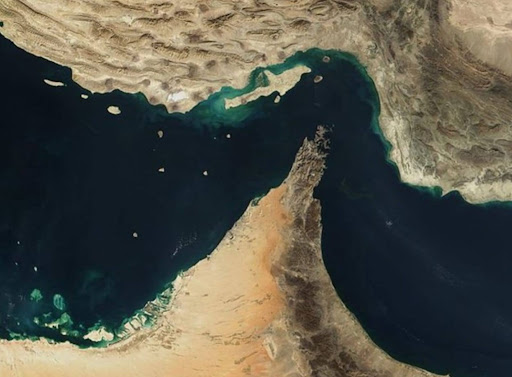
Photo Credit: Jacques Descloitres | NASA via Flickr
36