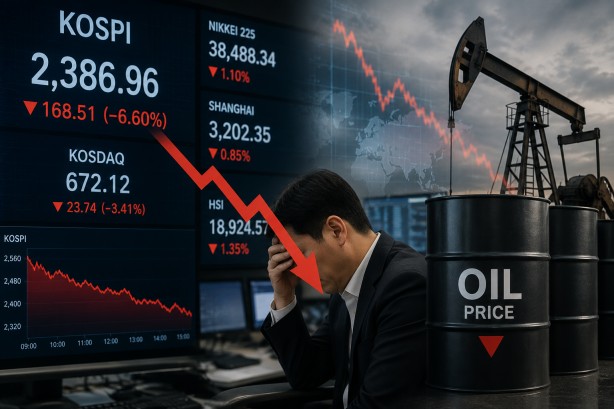
Asian stock markets saw a predominantly downward trend on Thursday, with South Korea’s Kospi suffering a significant 6.6% drop. This decline was driven by an unexpected interest rate increase by the Bank of Korea and substantial losses in the technology sector. Notably, SK Hynix plunged by 11.2%, and Samsung Electronics fell by 8.2%, contributing to the market’s overall downturn.
In Japan, the Nikkei 225 index decreased by 2.9%, primarily due to declines in chip-related firms such as Kioxia, Tokyo Electron, Advantest, and SoftBank Group. Meanwhile, Taiwan’s Taiex index experienced a slight 0.3% dip in anticipation of the upcoming earnings report from chipmaker TSMC. China’s Shanghai Composite also dropped by 0.9%, while Australia’s S&P/ASX 200 closed with a modest decline.
Contrasting the broader regional slump, Hong Kong’s Hang Seng Index rose by 1.7%. This increase was largely attributed to Alibaba’s gains following the approval of Apple Intelligence’s AI service in China, which utilizes Alibaba’s Qwen model. This positive movement in Hong Kong provided a rare bright spot in an otherwise challenging day for Asian markets.
Despite ongoing geopolitical tensions between the United States and Iran, oil prices saw a slight decline. Brent crude fell by 0.4% to $84.55 per barrel, while US crude decreased by 0.2% to $79.34 per barrel. Nonetheless, concerns about potential disruptions to shipping through the critical Strait of Hormuz continued to keep oil prices relatively high.
In contrast to the Asian markets, US stock markets closed higher the previous night. The gains were supported by easing inflation data and robust corporate earnings, offering a more optimistic outlook compared to the day’s activity in Asia.