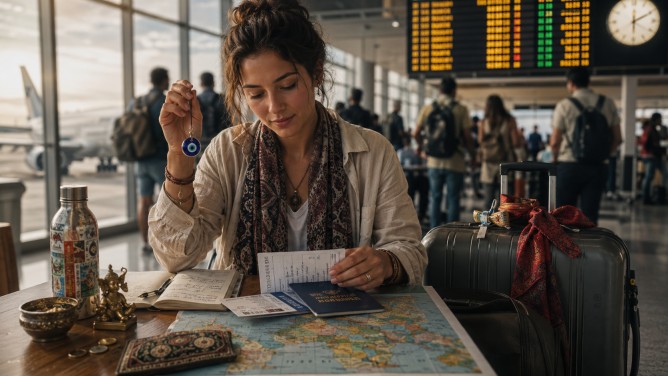
Travel often brings with it a sense of excitement and tradition, with various small rituals adding to the uniqueness of each journey. Around the globe, many cultures have developed intriguing superstitions to ensure good luck and protection while traveling. These beliefs, though lacking scientific validation, remain a fascinating aspect of travel culture, offering a glimpse into diverse cultural identities and practices.
One such custom is found in the Balkans, where garlic is traditionally seen as a safeguard against negative energy and the evil eye. Travelers from this region might tuck a clove of garlic into their luggage, trusting it to ward off misfortune during their travels. Meanwhile, a simple gesture known to frequent flyers is touching or tapping the outside of an aircraft before boarding. This ritual is thought to bring good luck and provide comfort, particularly for those uneasy about flying.
Starting a journey on the “right foot” is a literal practice for some travelers. Stepping onto a plane with the right foot first is believed to usher in good fortune. In various parts of the Middle East and the Balkans, families may perform a symbolic act of pouring or sprinkling water behind someone embarking on a trip. This act represents the hope for a smooth, safe journey and the traveler’s eventual safe return.
Numbers play a significant role in travel superstitions across different cultures. In Western countries, 13 is commonly considered unlucky, while in China, the number 4 is often avoided due to its phonetic similarity to the word for death. Similarly, in Italy, the number 17 carries a historical connotation of bad luck. These beliefs can influence decisions such as hotel room numbers and building floors. Additionally, a traditional Slavic custom involves sitting quietly on one’s packed luggage before departure, allowing a moment of reflection and mental preparation for the journey ahead.
Finally, in some cultures, sweeping the floor immediately after a traveler departs is considered unlucky. This belief holds that such an action might symbolically sweep away the person’s good fortune or safety. While these rituals may seem unusual to outsiders, they serve as a way for people to honor family traditions and embrace the anticipation of new adventures.