Donald Trump has announced that the United States will waive some oil-related sanctions in an effort to bring down the cost of fuel worldwide. The news immediately impacted the markets, with Brent crude prices falling from their recent four-year highs. The President’s decision follows a week of intense military activity and a conversation with the Russian leadership regarding global energy availability.
The global supply chain was pushed to its limits when Iran’s Revolutionary Guards threatened to halt all oil exports from the Middle East. This threat specifically targeted the Strait of Hormuz, a waterway that is vital for the transit of 20% of the world’s oil and gas. For seven days, the strait was virtually closed, causing a spike in prices that many feared would become permanent.
Trump’s strategy involves a delicate balance of military threats and economic relief. While he suggested the war was nearly over, he also used social media to warn Iran that any interference with oil tankers would result in a massive US response. “We have won in many ways,” Trump said, while also acknowledging that the situation requires ongoing vigilance to ensure energy security.
The high cost of fuel has triggered a wave of government intervention across the globe to prevent economic hardship. In Europe, countries like Hungary and Croatia have capped fuel prices, while in Asia, Bangladesh has moved to conserve power by closing educational institutions. These measures underscore the fragility of the global economy when faced with instability in the Middle East.
As the markets settle, the focus is now on the potential for an international maritime task force to protect shipping. President Macron of France has indicated that several nations could provide naval escorts once the conflict’s most intense phase is over. Such a move would provide the long-term security needed to keep oil prices stable and prevent future supply shocks.
Trump Moves to Ease Global Energy Supply Crisis with Sanction Waivers
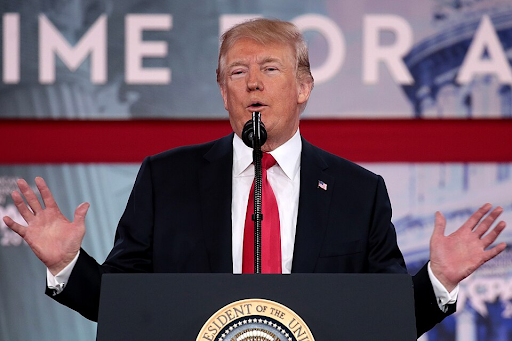
Photo by Gage Skidmore / Wikimedia Commons (CC BY-SA 2.0)
57