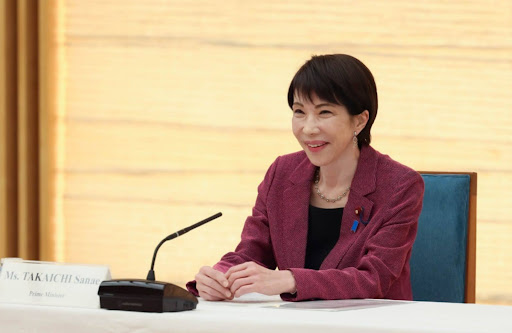
Japan is set to release oil from its strategic reserves on an unprecedented scale, as Prime Minister Sanae Takaichi confirmed the drawdown of approximately 80 million barrels to help domestic refiners weather the energy disruption caused by the US-Israel war on Iran. The release equates to 45 days of Japan’s domestic oil consumption and is being described as the largest in the country’s history. It comes on top of last week’s government approval of a 15-day release from private-sector stockpiles. Japan, which imports more than 90% of its crude from the Middle East, is taking no chances as the Strait of Hormuz faces ongoing risk.
Takaichi announced the start of state reserve releases via social media, emphasising that peace in the Middle East is vital to both Japan and the global community. She stressed that Tokyo would continue robust diplomatic efforts to resolve the conflict. Earlier, the prime minister had declined President Trump’s request to send Japanese naval ships to the Strait of Hormuz, citing the nation’s pacifist constitution as a binding constraint. Tokyo’s response has thus focused entirely on economic and diplomatic tools.
This reserve release surpasses all previous emergency drawdowns. It is 1.8 times the volume released following the March 2011 Fukushima nuclear disaster, which had forced the temporary closure of every nuclear power plant in Japan. Despite the massive release, Japan retains reserves of about 470 million barrels, covering roughly 254 days of domestic demand. The sheer scale of existing reserves provides a degree of buffer for further drawdowns if needed.
On the consumer side, the government has introduced fuel subsidies to hold gasoline prices at ¥170 per litre, having seen them climb to a record ¥190.8. These subsidies are subject to weekly review in light of evolving oil prices. The intervention reflects Tokyo’s sensitivity to the inflationary impact of energy costs on households and businesses alike. Maintaining public confidence in supply stability is central to the government’s communication strategy.
Misinformation spreading on social media has led some consumers to panic-buy toilet paper and household goods. The trade and industry ministry responded with a public advisory, emphasising that 97% of Japan’s toilet paper is locally produced and has no link to oil imports. The paper industry association backed this up, confirming that supply chains are intact. Officials are urging calm purchasing behavior to prevent a manufactured shortage driven by social media fear.